You know the feeling. Half nine at night, laptop on your knees, and you're certain somebody said the thing. You were in the room. You can hear their voice saying it. You just can't find it.
So you start opening documents. "Morning two". "Kitchen chat". "IMG_0455 transcript". Four in, you find it, and by then you've forgotten why you wanted it.
You didn't lose the line
You lost the link between the words and the footage.
The transcript is a dead copy of your rushes. The words are right, but they've been cut loose from the thing they describe, so every time you want to use one you have to do the join by hand. Read the doc, find the line, note a rough timecode, go into the NLE, scrub, miss it by 40 seconds, scrub again.
Two hundred of those across a series is your week. Every problem below is that one break, showing up in a different room.
The person who inherits your file names
You named those files at speed, at the end of long days, and you knew exactly what you meant at the time. Somebody else opens the folder six weeks later with none of that context and the most to do.
When every session arrives in one library as it's shot, with the shoot day and time of day already attached, nobody names anything. There's nothing to inherit and nothing to guess at.
The exec who wants a go at it
Send an exec a Word doc and you get an email back with highlights and rough timecodes. Then you do the typing.
If the transcript is somewhere they can open, they work in it properly. They read, they mark what they want, they build a paper edit out of the actual words. Because every word carries its own timing, their choices have real in and out points, and that paper edit becomes a timeline in your NLE. Cut at the words they picked, with handles, against your rushes.
You're handed decisions you can build from, not a list of things to go and find.
The editor waiting on a drive
The rushes are in a van, or copying overnight, or with a courier. Your editor is sat there.
Words are tiny. They don't have to wait for any of it. Read the interviews, grade the selects, work out the shape, and when the footage lands you're building rather than starting. On a fast turnaround that's the whole job.
The client who rings four months later
They remember somebody saying something about their dad. Not who, not when, not which shoot.
If every transcript you've ever made is in one place, you search the lot, not the file you happen to have open. Search, click the word, hear it play, give them the timecode while you're still on the phone.
Three years of work stops being a hard drive and becomes something you can ask questions of.
What Earwig Sync does
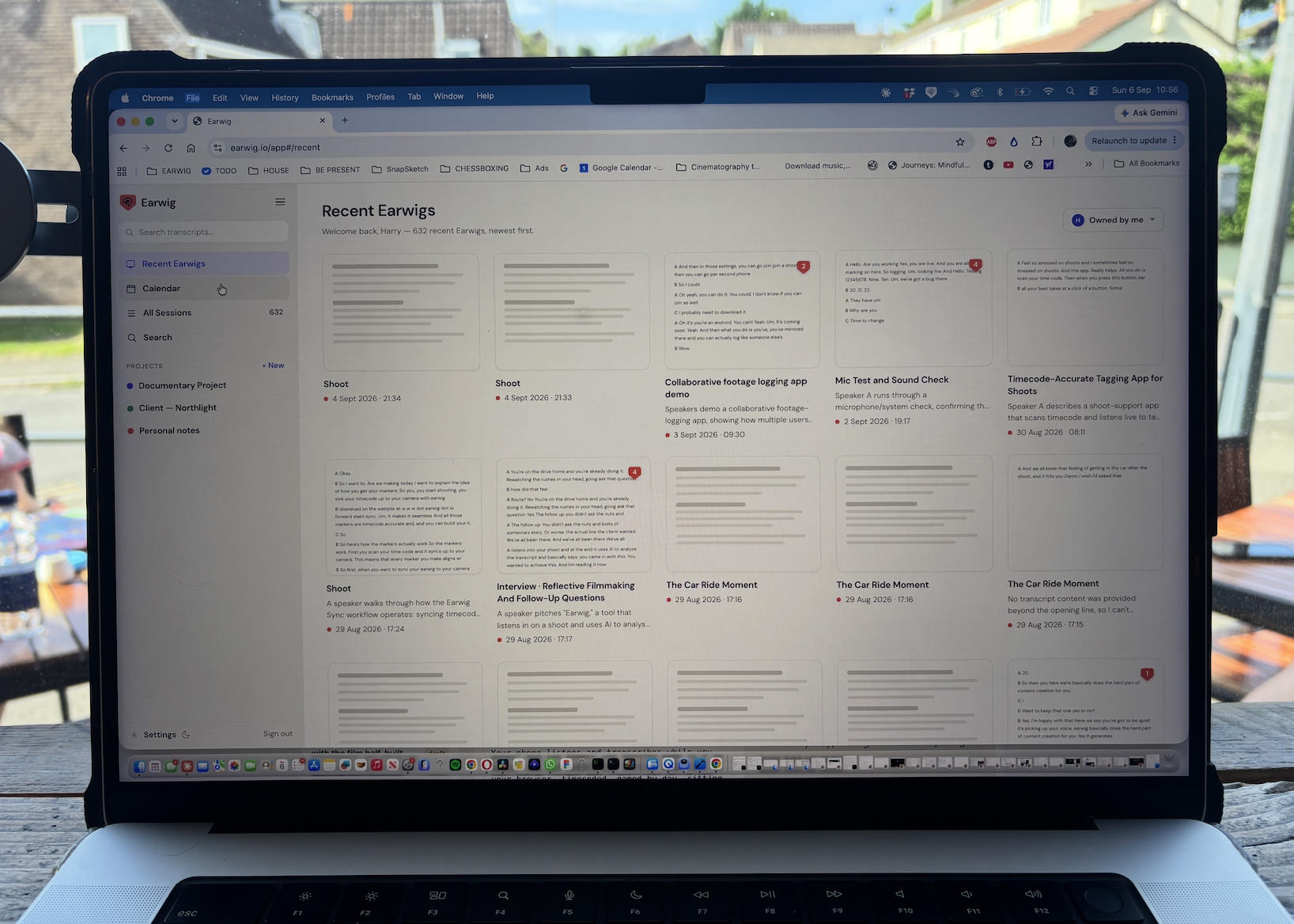
Earwig Sync is the desktop half of Earwig. Your phone listens and transcribes while you shoot, and the moment the session ends it's in your browser, timecoded, named by day, sitting next to everything else you've shot.
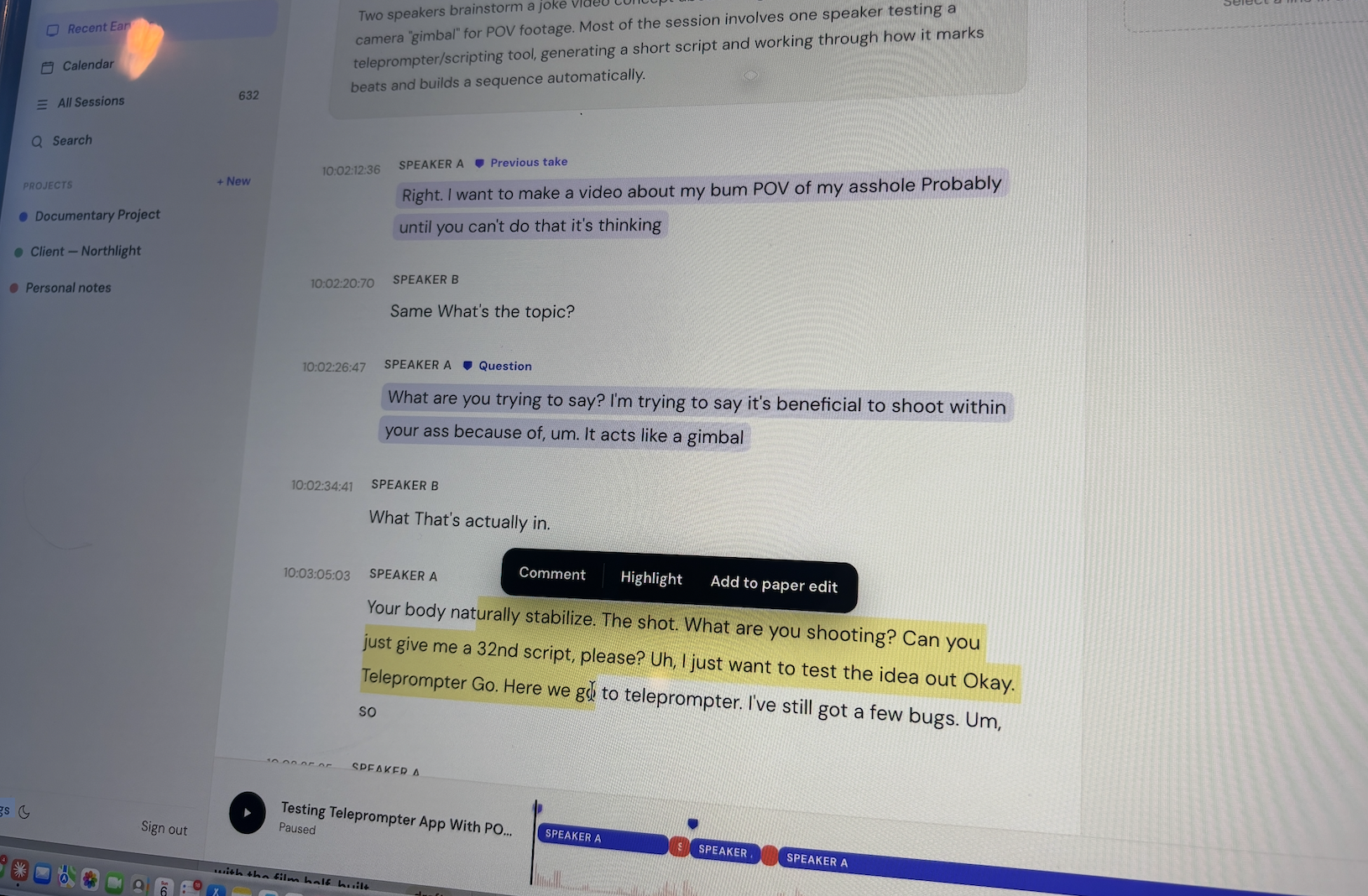
From there you can click any word to hear it, drag across words to grade selects, collect those selects into a paper edit, and share the session with your editor or your exec on a link. They work in it live. Then one button builds the timelines in Resolve or Premiere against your own copy of the rushes, cut at the words, with handles.
The words and the footage stay joined. That's the whole idea.
earwig.io/app
Comments
No comments yet — be the first.